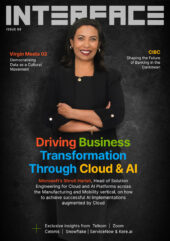





Louise Newbury-Smith, Head of UK&I at Zoom

AI elevates both manager effectiveness and employee autonomy
“Moving forward, AI will simultaneously strengthen managerial capabilities and empower employees to work more autonomously. Managers will gain real-time insights into workload distribution and collaboration patterns, allowing them to support wellbeing, performance and development, without relying on manual check-ins. At the same time, intelligent workflows will give employees greater control over how they work enabling them to personalise tasks, streamline processes and focus on higher-value activities. This dual uplift will reduce friction, improve team culture, and create a more balanced workplace environment.”
AI fluency becomes the new foundational skillset
“The next phase of upskilling will blend technical and human capabilities. Employees will be expected to understand how to collaborate with AI, interpret its recommendations, and challenge outputs when necessary. Training and change management will be essential to realising the full value of these emerging tools. For IT teams, this means not only deploying the technology but also leading adoption across the workforce.”

Darin Patterson, Vice President of Market Strategy at Make

2026 will be the year businesses of all sizes finally turn AI’s promise into measurable value
“Companies will shift from experimentation to dependable automation that powers productivity, decision-making, and customer experience behind the scenes. AI will be judged less by novelty and more by real outcomes, whether orchestrating marketing campaigns, managing workflows in professional services, or enabling personalised, frictionless customer interactions. With maturing standards like Model Content Protocol and Agent2Agent moving into widespread use, organisations will gain the stability and coordination needed for scalable multi-agent systems that quietly keep operations running.
As these technologies advance, AI’s complexity will fade into the background. Concepts like embeddings and prompt engineering will be built into everyday tools, allowing smaller businesses and non-technical teams to deploy automation quickly and confidently. In 2026, the winners will be the companies using AI for practical, connected automation that drives results, while standalone chatbots and overly complex approaches fall away. The future belongs to businesses that stop chasing hype and start running on AI.”

Cathy Mauzaize, President, Europe, Middle East and Africa (EMEA) at ServiceNow

The governance vs. speed tension will define leadership in 2026
“As AI becomes core to how organisations operate, leaders will face a growing challenge: how to maintain trust without slowing down innovation. Across EMEA, this balance between governance and speed is becoming the defining measure of AI maturity. The EU AI Act marks a turning point that moves regulation from theory to practice. But rules alone won’t create responsible AI. The real test will be how organisations translate compliance into everyday practice, embedding accountability and transparency into workflows, data, and decisions.
The University of Oxford’s Annual AI Governance Report 2025 found that leading organisations are embedding governance directly into workflows, not treating it as a compliance exercise. In doing so, they’re maintaining innovation speed while reducing AI-related risk.
The leaders who succeed will treat governance not as a brake, but as an engine of trust and resilience. They’ll build cultures where transparency, explainability, and ethical use are built in, not bolted on. They’ll use clarity to move faster, not slower. Doing this will require a central, single-platform lens of LLMs, AI agents and workflows.
This is what will separate compliance from competitiveness. AI must remain fast enough to drive innovation yet be governed tightly enough to earn trust. The leaders who get this balance right will define the next phase of growth, proving that responsible AI and rapid progress can coexist.”
CIOs must lead the enablement of agentic AI with a view to future risk
“2026 will mark the rise of Agentic Platforms – networks of intelligence that blend human and machine work to drive speed, accuracy, and innovation. These agents will increasingly operate alongside people, managing workflows and simplifying complexity – not to replace human judgment, but to strengthen it.
Yet, as this new layer of work evolves, so does a new layer of risk. The challenge will no longer be shadow IT, but ‘shadow AI’ – models and agents developed outside governance frameworks. This creates vulnerabilities for compliance, privacy, and security. Although regulations are evolving across regions, innovation is already moving faster than policy. CIOs and boards will need to anticipate, not react, staying one step ahead of regulatory change to avoid future disruptions. Agility will be the differentiator.
The leaders who succeed will do so by adopting flexible, adaptive platform architectures, able to connect data, governance, and decision logic by design. These platforms will allow organisations to monitor, verify, and coordinate AI activity across every functions, ensuring that trust, compliance, and performance advance together.”

Peter Budweiser, General Manager Supply Chain at Celonis

The race to autonomous operations will be won by orchestration
“Enterprises have spent a decade automating tasks. But in the agentic future, the differentiator won’t be how many tasks you automate, it will be how well you orchestrate outcomes. In 2026, leaders will shift from fragmented automation to coordinating AI, people and systems across the entire workflow. This is the only way to transform business processes into truly autonomous operations.
Supply chains will become the proving ground for orchestration. AI will dynamically reroute shipments, rebalance inventory, surface capacity constraints, and coordinate suppliers and planners in the same loop – turning fragile networks into intelligent, adaptive ecosystems that are able to respond instantly to tariffs, disruptions and volatility.
The strategic driver behind supply chain transformation is no longer just cost – its competitiveness. Orchestration lets companies coordinate AI agents, humans, and systems in real time, so their supply chains become more agile, more efficient, and better able to support new business opportunities.”
Dan Brown, Chief Product Officer at Celonis

The AI revolution will run on context
“After years of experimentation, companies will realise that AI can’t improve what it doesn’t understand. In 2026, competitive advantage will shift to organisations that give AI the operational context it needs – a living digital twin that shows how the business actually runs. This is how AI learns to sense, reason, act, and improve responsibly.
Context-aware AI will reshape supply chain decision-making. Instead of optimising isolated steps, AI will understand the full flow – predicting bottlenecks before they occur, identifying exceptions that matter, and orchestrating recovery plans grounded in financial and service-level impact. This closes the gap between planning and execution.
AI can’t drive business value without understanding how your business flows. When you give it that context – the real-time visibility into how work gets done – the trust comes naturally. You see why it made a decision and how to make it better. That’s when AI becomes enterprise-ready.”

Baris Gultekin, Vice President of AI, Snowflake

Data becomes a more powerful moat for Enterprise AI
“The pace of innovation in frontier AI models has provided the enterprise with an incredibly powerful and mature foundation. Give or take a few benchmarks, model capabilities are reaching a high floor, offering similar, state-of-the-art performance. Similarly, as building AI-powered apps becomes faster and easier to build for people of all technical backgrounds, the features that distinguish one product from another will also begin to fade.
By 2026, we’ll see this commoditisation accelerate across the entire AI stack. In this new landscape, an organisations’ sustainable competitive advantage won’t be the model or application itself, but the unique, proprietary data an organisation holds and its ability to reason over it. The companies that master the ‘data flywheel’ – using their unique data to create better AI, which in turn generates more unique data – will establish meaningful differentiation for years to come, and continue to benefit from improvements to the AI tools themselves.”
Agent Interoperability will unlock the next wave of AI productivity
“Today, most AI agents operate in walled gardens, unable to communicate or collaborate with agents from other platforms. This is about to change. By 2026, the next major frontier in enterprise AI will be interoperability – the development of open standards and protocols that allow disparate AI agents to speak to one another. Just as the API economy connected different software services, an ‘agent economy’ will quickly emerge, where agents from different platforms can autonomously discover, negotiate, and exchange services with one another. Solving this challenge will unlock compound efficiencies and automate complex, multi-platform workflows that are impossible today to usher in the next massive wave of AI-driven productivity.”
Dwarak Rajagopal, Vice President of AI Engineering and Research, Snowflake
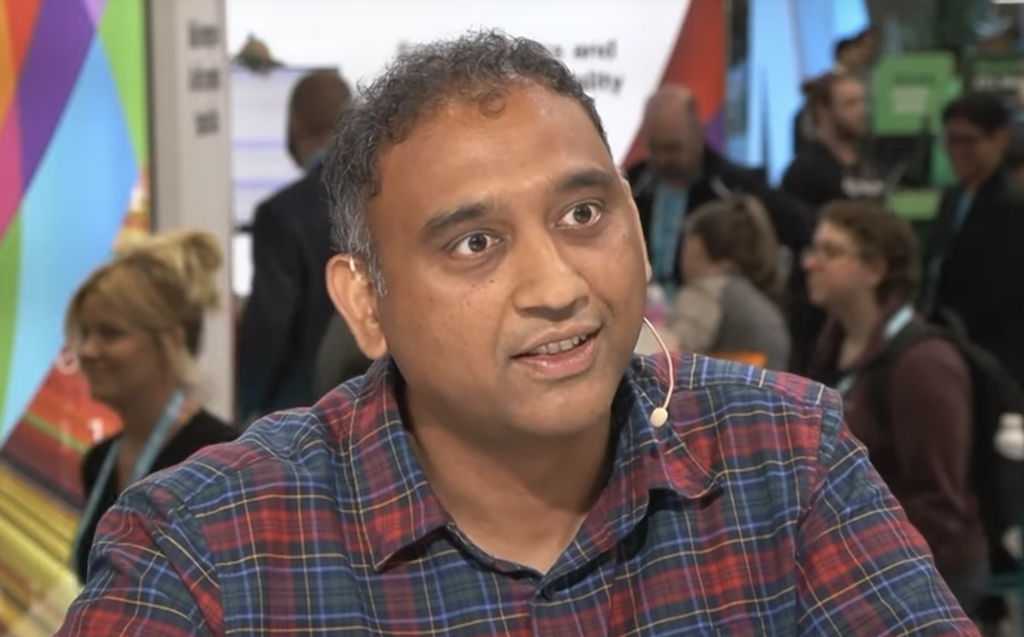
The future of AI agents is in self-verification, not human intervention
“In 2026, the biggest obstacle to scaling AI agents – the build-up of errors in multi-step workflows – will be solved by self-verification. Instead of relying on human oversight for every step, AI will be equipped with internal feedback loops, allowing them to autonomously verify the accuracy of their own work and correct mistakes. This shift to self-aware, ‘auto-judging’ agents will enable the development of complex, multi-hop workflows that are both reliable and scalable, moving them from a promising concept to a viable enterprise solution.”
Mike Blandina, Chief Information Officer, Snowflake
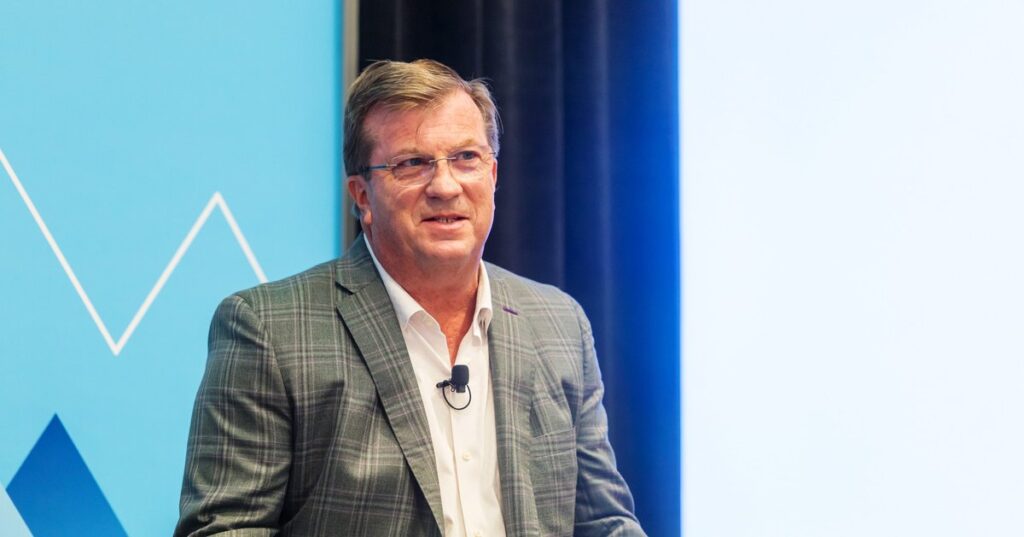
AI will redefine the role of the CIO from IT Operations to Enterprise Innovation
“In the next year, the role of the CIO will shift from ‘IT’ to ‘ET’ – from information technology to enterprise technology leadership. Traditional metrics like ticket counts will still matter, but forward-looking CIOs will adopt a solution mindset. The modern CIO must leverage AI not just to source tools, but to engineer outcomes. Instead of recommending SaaS vendors, CIOs will assemble multiple LLMs to build solutions to solve today’s problems while anticipating what’s next. The IT function will no longer be just about infrastructure – it will be about delivering corporate intelligence with AI-driven solutions and providing leverage across every critical business platform. AI will redefine the CIO as a business innovator, not just a technology operator.”
CIOs will become an organisation’s number one sustainability steward
“In 2026, CIOs will be expected to own the responsibility for tech-driven sustainability. As enterprises face mounting pressure from regulators, investors, and customers to meet climate goals, CIOs will be expected to deliver the data, platforms, and AI-driven insights that make sustainability measurable and actionable. From optimising cloud workloads for lower energy use to applying advanced analytics that cut supply chain emissions, CIOs will increasingly be at the centre of corporate sustainability strategies. This isn’t just about compliance reporting, it’s about leveraging technology to transform sustainability into a source of efficiency, growth, and differentiation for the enterprise.”
- Data & AI
- Digital Strategy